Your Size, Actually: How Fashion Tech Is Finally Making Fit Personal
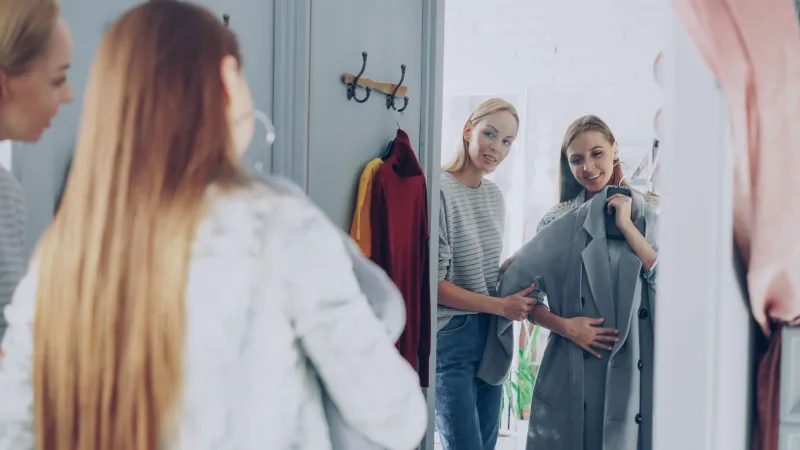
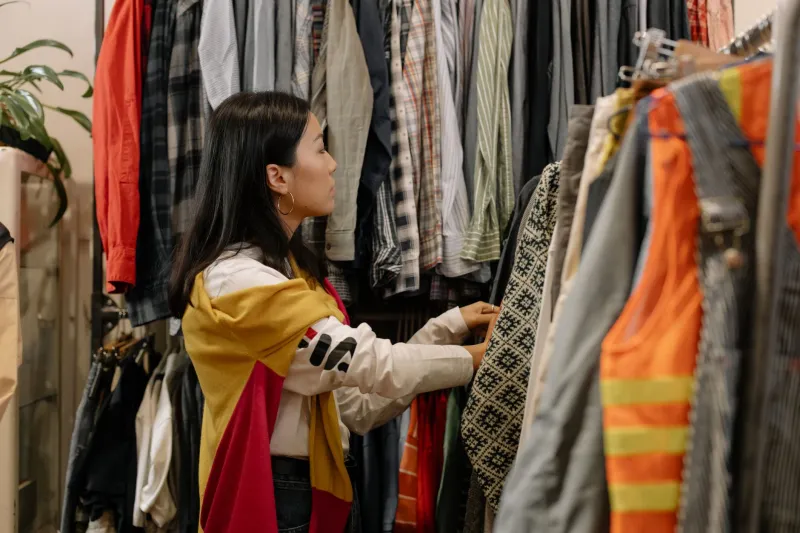
Ask almost any American woman about her relationship with clothing sizes, and you'll get a story. The jeans that fit in the waist but gap at the back. The blazer that works on the shoulders but pulls across the chest. The dress that looks incredible on the model and baffling on literally everyone else. Sizing, in American fashion, has always been less a system than a suggestion—and for millions of shoppers, a deeply frustrating one.
But something is changing. Quietly at first, and now with increasing urgency, a new generation of fashion brands and tech companies is attacking the fit problem head-on. And the tools they're using—artificial intelligence, 3D body scanning, dynamic sizing algorithms, and virtual fitting rooms—are starting to make personalized fit feel less like a luxury and more like a baseline expectation.
The Broken System Nobody Fixed
To understand why this moment matters, it helps to understand just how broken traditional sizing actually is. American clothing sizes were last standardized in a meaningful way in the 1940s, based on measurements taken from a narrow demographic sample. The industry has been improvising ever since.
The result is a system that serves almost no one consistently. A size 10 at one brand is a size 14 at another. "Plus size" starts at different numbers depending on who you ask. Petite, tall, curvy, athletic—these categories exist in some stores and are completely absent in others. And even within a single brand, fit can vary wildly between styles, seasons, and fabrications.
The cost of this dysfunction is significant. Returns account for roughly 30 percent of all online fashion purchases in the US, and fit issues are the leading cause. That's an environmental and financial drain that the industry has largely accepted as the cost of doing business. Until now.
AI Enters the Fitting Room
The most visible innovation in the fit space right now is AI-powered sizing. Brands like True Fit, Fits.me, and a growing roster of direct-to-consumer startups are using machine learning to analyze customer data—measurements, purchase history, return patterns, stated preferences—and generate personalized size recommendations that go well beyond "you're probably a medium."
True Fit, which partners with major retailers including Nordstrom and Macy's, has built what it calls a "Fashion Genome"—a data infrastructure that maps the relationship between body measurements, garment construction, and fit outcomes across millions of transactions. When you get a recommendation from True Fit, it's not just matching your chest measurement to a size chart. It's drawing on patterns from people with similar body profiles, similar fit preferences, and similar experiences with specific brands.
The results are measurable. Brands using AI fit technology report meaningful reductions in return rates and increases in customer satisfaction scores. More importantly, they're seeing higher conversion rates among shoppers who have historically been underserved by standard sizing—a signal that fit technology isn't just a retention tool, it's a growth driver.
3D Fitting Rooms: From Novelty to Necessity
Virtual try-on technology has been around in various forms for years, but it's maturing fast. Early versions were clunky and unconvincing—a flat image of a garment draped over a generic avatar that looked nothing like you. Today's 3D fitting rooms are a different animal entirely.
Companies like Browzwear, CLO Virtual Fashion, and ZEEKIT (acquired by Walmart in 2021) are building virtual fitting environments that account for fabric drape, stretch, and movement. Some platforms allow users to create photorealistic avatars from a few smartphone photos, then see how garments actually move on a body that reflects their proportions.
For shoppers, this means something genuinely new: the ability to evaluate fit before purchasing, in a way that's specific to their body rather than a standardized model. For brands, it means the ability to test and iterate on sizing before a single physical sample is produced—compressing the development cycle and reducing waste.
Designer Carly Cushnie, whose eponymous label has been an early adopter of 3D design tools, describes the shift as transformative. "We're able to see how a dress moves on a size 2 and a size 18 in the same session," she's noted in industry conversations. "That changes how you design from the very beginning."
Dynamic Sizing: The End of the Number?
Some brands are going further, questioning whether standardized size numbers need to exist at all. A handful of innovative labels are experimenting with what's being called dynamic or bespoke sizing at scale—using customer measurement data to cut garments closer to individual specifications without the price tag of traditional made-to-measure.
Startups like Unspun (which uses 3D body scanning to produce custom-fit jeans) and Proper Cloth (which has long offered this model for shirts) are demonstrating that personalized construction is achievable at a price point regular consumers can access. As manufacturing technology advances and the cost of customization drops, this model is increasingly viable for more categories.
The implications for body inclusivity are significant. When fit is built around the individual rather than a size category, the question of whether a brand "goes up to" a certain size becomes less relevant. The garment fits because it was made for you, full stop.
Why This Is a Competitive Advantage, Not Just a Feel-Good Story
Here's the business case that's finally getting the industry's attention: body inclusivity, powered by fit technology, is a genuine competitive differentiator.
The extended size market in the US represents hundreds of billions of dollars in purchasing power that mainstream fashion has historically underserved. Brands that solve the fit problem for consumers who've been failed by standard sizing don't just earn a sale—they earn loyalty at a depth that's difficult to replicate through marketing alone.
Consumers who finally find a brand that fits them reliably become evangelists. They recommend to friends, they return repeatedly, and they're significantly less price-sensitive than average shoppers. In a market where customer acquisition costs are rising and brand differentiation is increasingly difficult, that kind of loyalty is worth more than any campaign.
And the brands that are winning on fit aren't keeping it quiet. Universal Standard, which built its business around an unprecedented size range (00-40) and rigorous fit standards, has made fit integrity central to its brand identity. Girlfriend Collective has done the same in activewear. These aren't brands that added inclusivity as an afterthought—they built around it, and their growth reflects that.
What Comes Next
The fit revolution is still early. Most consumers haven't yet experienced AI-driven sizing or 3D virtual fitting, and adoption is uneven across retail channels. But the trajectory is clear.
As smartphone cameras get better and body-scanning apps become more accurate, the friction of creating a personal fit profile will drop toward zero. As AI models train on more diverse datasets, recommendations will become more precise across a wider range of body types. And as more brands compete on fit quality, the expectation that clothing should actually fit the person wearing it—rather than the other way around—will shift from aspiration to industry standard.
For fashion-forward consumers, that future can't come fast enough. The days of contorting yourself to fit a size chart are numbered. The clothes are finally going to start meeting you where you are.