The Thrift Era: Why Gen Z Decided 'New' Is Overrated
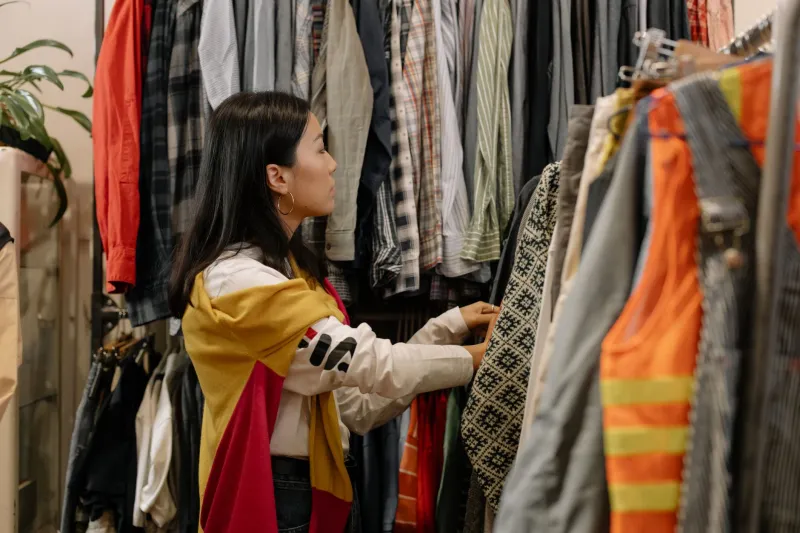
Walk into any Goodwill in a college town on a Saturday morning and you'll see them: Gen Zers with a focused, almost competitive energy, flipping through racks with the practiced efficiency of seasoned buyers. They're not there because they can't afford anything else. Many of them can. They're there because this is, genuinely, their preferred way to shop.
The resale market in the US is on track to hit $70 billion by 2027, according to ThredUp's annual resale report. And the generation driving that growth isn't doing it reluctantly. They've made secondhand fashion their default — a cultural identity as much as a shopping habit.
Not Your Mom's Thrifting
Let's be clear: this isn't the thrifting of necessity that previous generations knew. It's not even the ironic thrifting of early 2010s hipster culture. Gen Z has transformed resale into something aspirational, curatorial, and deeply personal.
Platforms like Depop, Poshmark, ThredUp, and Vestiaire Collective have made the hunt global. A 19-year-old in Columbus, Ohio, can score a deadstock '90s Donna Karan blazer from a seller in Portland. A college student in Houston can build an entire wardrobe around rare Y2K pieces sourced from dozens of individual sellers across the country. The thrift store is still the starting point for many, but the ecosystem has expanded dramatically.
"Depop changed everything for my generation," says Imani, 22, a fashion studies student in New York. "It's not just shopping. It's discovery. Every piece has a story. Every find feels like an achievement."
That sense of the hunt — the rarity, the unpredictability — is a significant part of the appeal. In a world of instant, algorithmic, endlessly replicated fast fashion, finding something genuinely unique feels like a form of resistance.
The Values Driving the Shift
It would be easy to reduce this trend to environmental consciousness alone, but that's only part of the picture.
Yes, Gen Z is more climate-aware than any previous generation of consumers, and the fashion industry's outsized environmental footprint — it's responsible for roughly 10% of global carbon emissions — is something many young shoppers take seriously. But the secondhand preference is also about authenticity, individuality, and, frankly, economics.
With student loan debt, rising rents, and an uncertain job market, Gen Z has had to be creative about how they dress well on limited budgets. Resale offers a way to access quality — sometimes even luxury — at a fraction of retail price. A $15 silk blouse from Poshmark. A $40 vintage Levi's trucker jacket that would cost $150 new. The math makes sense.
But there's something else happening too: a genuine skepticism about the value proposition of "new." When a fast fashion piece falls apart after six washes, the idea that new equals better starts to feel pretty hollow.
"I'd rather spend $60 on a vintage Ralph Lauren polo that's already proven it lasts than $30 on something that's going to be in a landfill in a year," says Jordan, 24, a freelance photographer in Brooklyn.
The Platforms Powering the Movement
The infrastructure supporting this shift has matured rapidly. Depop, acquired by Etsy in 2021, remains the platform of choice for younger sellers and buyers — its social-media-like interface makes it feel more like browsing a friend's feed than scrolling a marketplace. Poshmark has leaned into community features, creating "Posh Parties" and live selling events that make the experience feel interactive. ThredUp operates more like a traditional retailer, handling the logistics of secondhand at scale and making it accessible to shoppers who don't want to dig.
Then there's the luxury resale sector, which has exploded. The RealReal has made authenticated secondhand Gucci, Prada, and Bottega Veneta accessible to buyers who couldn't touch retail pricing. Vestiaire Collective, while European in origin, has a significant and growing US user base. These platforms have done something remarkable: they've made buying used feel premium.
"Luxury resale has completely changed the conversation around secondhand," notes retail analyst and fashion commentator Tiffany Hsu. "When someone can buy an authenticated Chanel bag on a platform that feels as polished as Net-a-Porter, the stigma around 'used' evaporates."
How Traditional Retail Is Scrambling to Respond
Established brands are paying attention, even if their responses have been uneven.
Patagonia's Worn Wear program, which repairs and resells used gear, has become a genuine brand differentiator. Levi's SecondHand launched in 2020 and has continued to grow. Patagonia, Levi's, and a handful of other brands have leaned into resale as an extension of their identity rather than a threat to it.
Other brands have taken more tentative steps. Nordstrom partnered with Rent the Runway. REI has its used gear program. Even luxury behemoth Kering has invested in Vestiaire Collective.
But there's a tension here that hasn't been resolved. Brands that profit from volume — that need consumers to keep buying new — are fundamentally at odds with a generation that's decided buying less, but better, is the move. No resale partnership fully resolves that contradiction.
Fast fashion brands, in particular, are facing a reckoning. Shein and Temu may still pull enormous numbers, but they're increasingly seen by style-conscious Gen Zers as the uncool option — the thing you buy when you have no other choice, not the thing you brag about.
The New Flex Is the Find
Maybe the most telling cultural signal is what Gen Z brags about online. On TikTok and Instagram, the content that performs isn't "I bought this at Zara." It's "thrift haul," "thrift flip," "I found this at a Goodwill in rural Tennessee and I can't believe it."
The find is the flex. The story behind the piece is the point. A wardrobe built on unique, sourced, curated items says something about who you are — your eye, your patience, your values — in a way that a cart full of the same trending items everyone else has simply doesn't.
For a generation that grew up watching social media homogenize personal style into a series of identical "aesthetics," the appeal of a wardrobe that genuinely can't be replicated is enormous.
"Everyone had the same ASOS dress at prom," says Keely, 21, a student in Austin. "I never want to be the person wearing the same thing as everyone else again. Thrifting is how I avoid that."
The era of secondhand as first choice isn't a phase. It's a values shift — and the fashion industry is only beginning to catch up.