Scroll, Stitch, Sell: How TikTok Handed the Fashion Keys to a New Generation
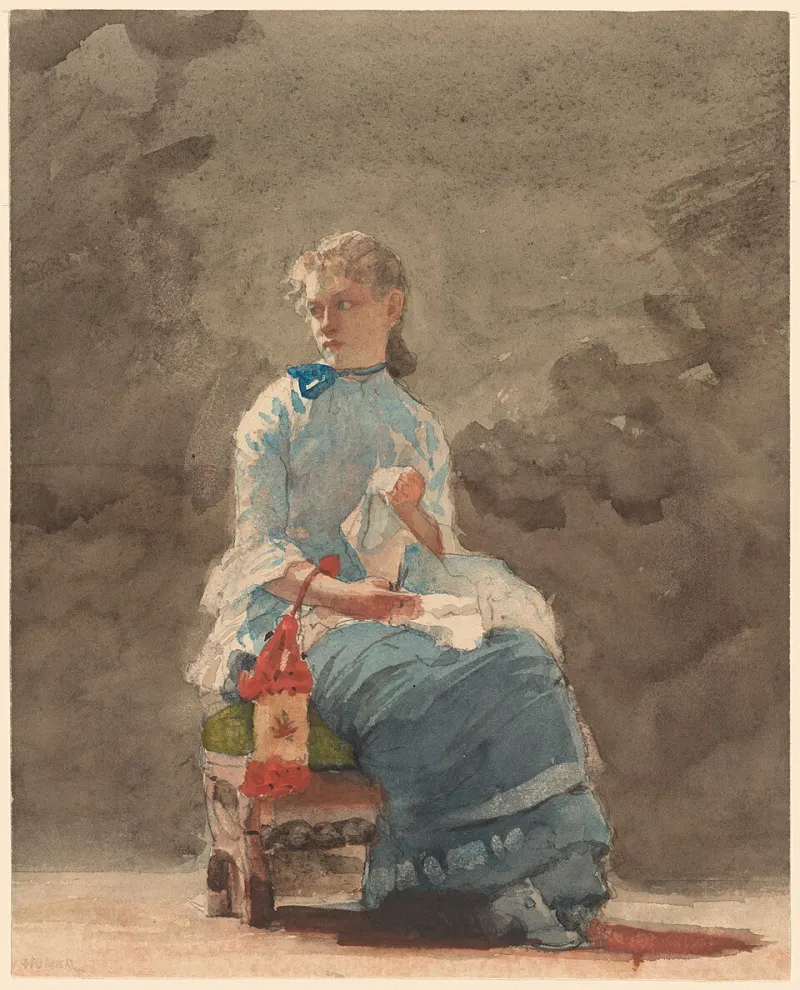
Photo: Winslow Homer, Public domain, via Wikimedia Commons
There's a designer in her Chicago apartment right now, cutting fabric on a folding table, and she has more cultural influence than half the people sitting front row at New York Fashion Week. That's not hyperbole — that's just Tuesday in 2025.
The fashion industry spent decades operating like a velvet-rope nightclub. Gatekeepers decided who got in, what got made, and who got to feel seen by their clothes. Then TikTok showed up and propped the door open with a brick.
The Algorithm Is the New Anna Wintour
Here's the thing about TikTok that legacy fashion houses still haven't fully processed: it doesn't care about your heritage, your ad budget, or your celebrity friends. It cares about whether your content makes someone stop scrolling at 1 a.m. That radical indifference to prestige is exactly what Gen Z has weaponized.
When Aaliyah Simmons, a 23-year-old designer from Atlanta, posted a 47-second video of herself constructing a hand-draped corset top from deadstock fabric, she wasn't pitching to buyers or courting editors. She was just sharing something she loved. The video hit 2.4 million views in four days. Her Depop shop sold out before she could restock. Her waitlist now stretches three months.
"I never thought about going the traditional route," Simmons says. "The traditional route wasn't built for someone who looks like me or makes the kind of stuff I make. TikTok let me find my people first and figure out the business second."
That sequencing — community before commerce — is the fundamental inversion that's reshaping American fashion from the ground up.
Micro-Brands Are Out-Trending the Mega-Houses
Walk through any college campus from Portland to Nashville and you'll spot it: the quiet but unmistakable preference for the small and the specific over the big and the branded. Kids are wearing pieces from designers with 80,000 followers instead of 8 million. They're trading spreadsheet links to independent shops the way previous generations traded mix CD tracklists.
This isn't just aesthetic preference — it's a values statement. Gen Z consumers have grown up watching fast fashion's environmental toll play out in real time. They've seen the exposés, the landfill footage, the labor violation headlines. Buying from a designer who shows you exactly where their fabric comes from, who makes a point of only producing what's already been ordered, feels like a corrective. It feels like taking the power back.
Marcus Tran, who runs the Dallas-based label Threadbare Theory, built his entire brand on this transparency. Every TikTok he posts includes a cost breakdown — materials, labor, his own time — and a frank explanation of why his pieces cost what they cost. "People DM me all the time saying they finally understand why fast fashion prices are a lie," he says. "That conversation is the marketing."
His most viral moment wasn't a dramatic reveal or a celebrity co-sign. It was a calm, nine-minute video explaining fabric weight. It has 6.1 million views.
What Goes Viral Isn't Always What You'd Expect
The fashion content that breaks through on TikTok tends to share a few qualities: it's specific, it's process-oriented, and it's honest in a way that polished brand content almost never is. The behind-the-scenes moment resonates harder than the lookbook. The "here's what went wrong with this sample" video outperforms the "here's our new collection" announcement every single time.
That's a genuine challenge for legacy brands trying to compete on the same platform. You can't manufacture authenticity, and Gen Z has finely tuned sensors for when someone's trying. The designers winning right now are winning because they're not performing transparency — they're just being transparent.
Jordan Blake, a non-binary designer based in Brooklyn who makes reconstructed vintage pieces under the name Undone Studio, puts it plainly: "The moment I tried to make my content look more 'professional,' my numbers tanked. When I went back to filming in my actual space, showing my actual process, including the mistakes, everything came back. People want the real thing."
The Power Shift Is Permanent
Some fashion insiders frame this moment as a trend — something that'll cycle back once the industry adapts. That's wishful thinking. The structural change here isn't about TikTok specifically; it's about the fact that distribution is no longer controlled by a small group of institutions. Any platform that lets creators reach audiences directly will produce the same result: new voices, new aesthetics, new power centers.
Gen Z isn't just consuming fashion differently. They're producing it differently, funding it differently, and deciding what's relevant in ways that don't require anyone's permission. The designers who are thriving right now didn't earn their place by impressing the right people at the right parties. They earned it by being genuinely compelling to a real audience, one scroll at a time.
For anyone paying attention, that's not a disruption. That's an upgrade.
The next wave of American fashion isn't going to come from a storied atelier or a heritage brand's creative director reshuffle. It's going to come from someone's apartment, filmed on a phone, posted on a Tuesday. And honestly? We can't wait to see what they make.