More Is More (When You Mean It): The Rise of Strategic Maximalism
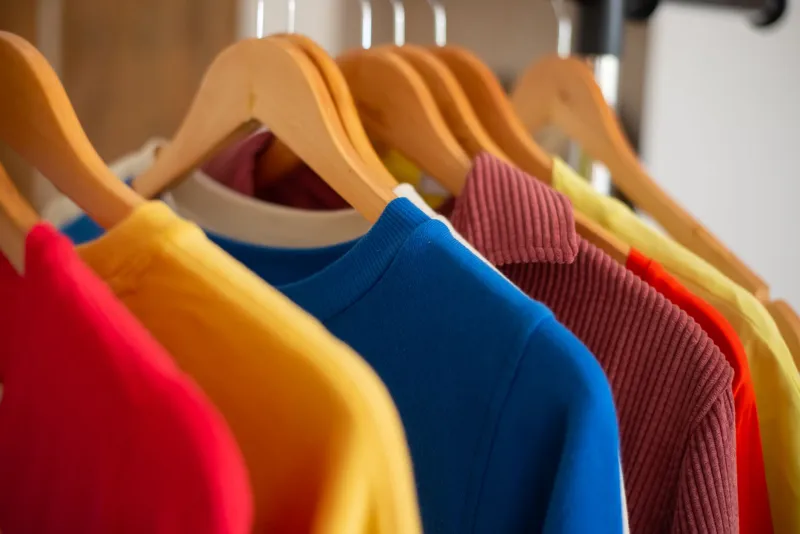
For the better part of a decade, the capsule wardrobe was gospel. Ten pieces. Neutral palette. Nothing you couldn't wear to a coffee meeting and a dinner party. The concept felt clean, responsible, even aspirational. Bloggers built entire brands around it. Marie Kondo made millions helping people strip their closets down to the essentials. And for a while, it genuinely felt like the future of fashion.
But here's the thing about restrictive ideals: eventually, people get tired of them.
A quiet but powerful shift is happening in how Americans think about their wardrobes. The rigid minimalism that dominated the 2010s is giving way to something richer, louder, and—counterintuitively—more intentional. Call it strategic maximalism. It's not about stuffing your closet with fast fashion impulse buys. It's about curating abundance with purpose, building a wardrobe that's layered, expressive, and genuinely versatile in ways that a ten-piece neutral collection never could be.
The Problem With Paring Down
The capsule wardrobe concept always had a hidden flaw: it assumed that simplicity equals sustainability, and restraint equals taste. But for a huge swath of consumers—especially those who live outside the narrow aesthetic window that most capsule guides were built for—minimalism was never actually liberating. It was limiting.
Think about it. A wardrobe built around beige linen and tailored white shirts doesn't work the same way for someone whose lifestyle demands range. Teachers, artists, performers, people who dress for cultural celebrations, people who simply love clothes—none of them were really served by the ten-piece fantasy. The capsule wardrobe, at its core, was a product of a very specific aesthetic class.
Strategic maximalism pushes back on that. It says: your wardrobe should reflect the full complexity of who you are, not a curated highlight reel of who you wish you were.
What "Strategic" Actually Means
Here's where this trend gets interesting—and where it diverges from plain old overconsumption. Strategic maximalism isn't a license to buy everything. It's a philosophy of intentional abundance.
The key word is versatility, but redefined. In a capsule wardrobe, versatility means one blazer that works with everything. In strategic maximalism, versatility means a vintage embroidered jacket that can be styled eight different ways—over a slip dress, under a structured coat, belted over wide-leg trousers, thrown over a swimsuit at a beach bonfire. The piece does more because it's more, not in spite of it.
Maximalist dressers are increasingly thinking in terms of layering systems rather than outfits. They're investing in statement pieces that anchor multiple looks, bold prints that mix rather than clash, and textures that create dimension when combined. The goal isn't a closet full of standalone items—it's a wardrobe that functions like a living ecosystem, where everything has the potential to interact with everything else.
Sustainability Gets a Reframe
One of the most compelling arguments for capsule wardrobes was environmental. Buy less, waste less. It's hard to argue with that logic on the surface. But the sustainability conversation in fashion is getting more nuanced, and strategic maximalism fits into it in ways that might surprise you.
When you invest in pieces you genuinely love—pieces that excite you, that you reach for constantly, that you'd never dream of discarding—you actually wear them more. Cost-per-wear, that beloved metric of the conscious consumer, drops dramatically when a colorful printed midi skirt gets worn forty times because it brings you joy, versus a beige one that sits unworn because it feels like a uniform you never signed up for.
There's also a growing argument that the capsule wardrobe model, in practice, leads to more shopping. When you restrict your wardrobe too aggressively, you create gaps. You buy a "foundational" white tee, it pills after six months, you replace it. You realize your ten pieces don't actually cover a friend's wedding, a camping trip, or that spontaneous themed party. You buy more. The cycle continues.
Strategic maximalism, by contrast, encourages building out rather than starting over. You're adding to a rich foundation, not constantly patching a sparse one.
The Designers Leading the Charge
The fashion industry is catching on. Emerging designers are increasingly building collections around the idea of mix-ability—pieces designed to work in unexpected combinations rather than prescribed outfits. Think bold color-blocking that's meant to be layered, prints that play with scale so they can be worn together without overwhelming, separates that are intentionally oversized so they function as both tops and outerwear.
Brands like Kika Vargas, Batsheva, and newer labels emerging from the New York indie scene are creating clothes that reward a maximalist approach. These aren't pieces designed to sit quietly in the background. They're designed to be in conversation with each other—and with the person wearing them.
Retail is shifting too. Stylists and personal shoppers who once preached the capsule gospel are now talking about "wardrobe architecture"—a term that implies building something complex and intentional, not whittling something down.
How to Actually Do This
If you're intrigued but nervous about tipping into chaos, the good news is that strategic maximalism has some practical guardrails.
Start with anchors. Identify three to five pieces you already own that feel most like you—the ones you reach for instinctively. Build outward from those, looking for pieces that can interact with your anchors in multiple ways.
Think in layers, not outfits. Instead of asking "what does this go with?" ask "how many different things can this go on top of, underneath, or beside?" A piece that answers that question with five or more responses earns its place.
Invest in quality at the statement level. You don't need every item to be an investment piece, but the bold, character-defining items in your wardrobe—the ones doing the heavy lifting stylistically—deserve to be built to last.
Let go of the guilt. A full, expressive wardrobe isn't a moral failing. The idea that wanting more clothes is inherently irresponsible was always more about aesthetics than ethics. What matters is how you shop, not how much you own.
The Closet as Creative Space
Maybe the most important thing strategic maximalism does is reframe the wardrobe as a creative space rather than a problem to be solved. Minimalism, at its worst, turned getting dressed into an exercise in efficiency. Maximalism, done with intention, turns it back into something closer to art.
Fashion forward dressers have always known this. The most interesting personal style isn't achieved by subtraction—it's built through accumulation, experimentation, and the willingness to take up space. The capsule wardrobe told us to edit ourselves. Strategic maximalism says: actually, let's see what you've got.