Peak and Plateau: Living Through Fashion's Infinite Trend Loop
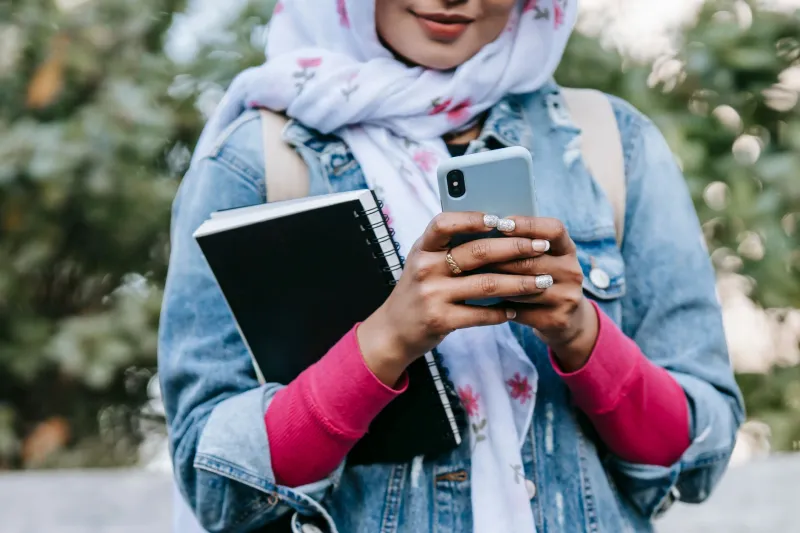
Let me paint you a picture. It's a Tuesday. You open TikTok during your lunch break and there it is—some new aesthetic you've never heard of, already fully formed, complete with a name, a hashtag, a mood board, and approximately 400,000 posts. By Friday, it's on every fashion account you follow. By the following Tuesday, someone is already declaring it over.
This is fashion in 2025. Not a slow build toward a seasonal direction. Not a trend you see on a runway in February and find in stores by September. A compressed, accelerating loop of emergence, saturation, and backlash that plays out in days rather than months—and leaves even the most enthusiastic fashion lovers feeling vaguely exhausted.
I've been thinking about this a lot lately, mostly because I've noticed something in myself and in the people around me: a kind of low-grade fashion fatigue that sits underneath genuine excitement about clothes. We love style. We love the creativity and the self-expression and the thrill of finding something that feels exactly right. But the speed of the current trend cycle is doing something strange to that love, and it's worth talking about honestly.
How We Got Here
The traditional fashion trend cycle—the one that ran on seasons, runway shows, and editorial coverage—was already accelerating before social media entered the picture. Fast fashion compressed what used to be a six-month runway-to-retail pipeline into weeks. By the early 2010s, trends that debuted in February were already in Zara by March.
But the algorithm era didn't just speed things up further—it fundamentally changed the shape of how trends move. Pre-social media, trends diffused outward from a small number of gatekeepers: designers, editors, stylists. The flow was top-down and relatively predictable. Now trends emerge from anywhere—a thrift store find filmed in a parking lot, a niche subculture that gets accidentally amplified, a celebrity airport outfit that someone screenshots at 2 AM.
TikTok in particular has created a trend engine unlike anything fashion has dealt with before. Its recommendation algorithm is extraordinarily good at identifying content that's gaining traction and amplifying it to massive audiences within hours. The result is a system that can take something from zero to ubiquitous at a pace that makes the old fast fashion model look sluggish.
The data backs this up. Where fashion trends once operated on 20-year cycles (the rough time it takes for a style to feel vintage, then retro, then fashionable again), researchers studying social media trend patterns are now documenting cycles compressed into months. Some micro-trends—the very specific, hyper-named aesthetics that proliferate on TikTok—peak and decline within four to six weeks.
The FOMO Machine
Here's what that speed does to real people: it creates a state of perpetual fashion FOMO that's genuinely hard to shake.
When a trend moves slowly, you have time to evaluate it. You see it, you sit with it, you decide whether it actually fits your life and your aesthetic before it's everywhere. When a trend moves at algorithm speed, by the time you've decided you like something, the window to participate in it feels like it's already closing. The message—implicit but constant—is that if you're not wearing it now, you've already missed it.
For a certain kind of fashion enthusiast, this creates a compulsive loop of acquisition and anxiety. You buy the thing. It arrives. You wear it twice. The trend has already peaked and the discourse has moved on to declaring it embarrassing. Now you have a piece that feels dated before you've even had time to style it properly.
This isn't hypothetical. The rise of what people are calling "trend fatigue" is showing up in consumer research, in the comment sections of fashion content, and in the conversations happening in personal style communities across Reddit and Discord. People are burnt out. And they're starting to articulate, sometimes quite clearly, that the speed itself is the problem.
The Backlash to the Backlash
Interestingly, the acceleration of trend cycles has produced its own counter-movement—and it's one of the more hopeful things happening in fashion right now.
A growing contingent of style-conscious consumers is opting out of the cycle entirely, or at least radically slowing their participation in it. They're building what some are calling "anti-trend wardrobes"—collections built around personal aesthetic coherence rather than moment-to-moment relevance. They're actively resisting the pressure to chase whatever is currently saturating their feeds, and finding genuine satisfaction in wearing what they actually love, algorithm be damned.
This shows up in the resurgence of interest in personal style as distinct from fashion trends. The most-followed accounts in certain corners of the style internet right now aren't the ones tracking what's trending—they're the ones with a distinctive, unwavering point of view. Creators who've worn the same aesthetic for five years and look completely unbothered by whatever micro-trend is currently dominating TikTok.
There's something almost radical about that kind of consistency right now. In an environment engineered to maximize novelty and reward constant reinvention, deciding that you know who you are and you're going to dress like it regardless of what's trending is a genuine act of style independence.
The Designers Caught in the Middle
It's worth noting that this acceleration isn't just a consumer problem—it's a creative crisis for the designers and brands trying to exist within it.
The pressure to respond to viral moments in real time has created a strange situation where trend forecasting, once a sophisticated discipline involving years of cultural analysis, has been partially replaced by watching TikTok and reacting. Brands that are too slow to respond to a viral moment miss the wave. Brands that respond too quickly produce pieces that arrive when the trend has already died.
Smaller designers are particularly squeezed. They can't manufacture at the speed the algorithm demands, and they shouldn't have to—good design takes time. But they're competing for attention in an environment that rewards immediacy above almost everything else.
Some are finding ways to turn this tension into an asset. Leaning into their slowness, their intentionality, their refusal to chase the cycle, as a brand story in itself. "We make things that last longer than the trend" is becoming a genuine selling point for a consumer base that's increasingly exhausted by the alternative.
What Fashion Forward Actually Looks Like
I want to push back on the idea that being fashion-forward means being the first to adopt every new trend. That's not forwardness—that's just reactivity dressed up as taste.
Real style forwardness, the kind that actually stands the test of time, has always been about developing a perspective that's your own and committing to it. It's about understanding trends as raw material rather than a to-do list. It's about being able to look at what's moving through the culture and decide, with genuine discernment, what resonates and what doesn't—and not feeling like you've failed if the answer is "not much of it."
The infinite trend loop is real, and it's not going anywhere. The algorithm isn't going to slow down because we're tired. But the way we relate to it—with anxiety and compulsion, or with curiosity and selective engagement—is entirely within our control.
Wear what you love. Wear it past its trend moment. Wear it before it's a trend at all. That, more than anything, is what it means to be fashion forward.