Dress Like a Contradiction: Why the Best Outfits Don't Make "Sense"
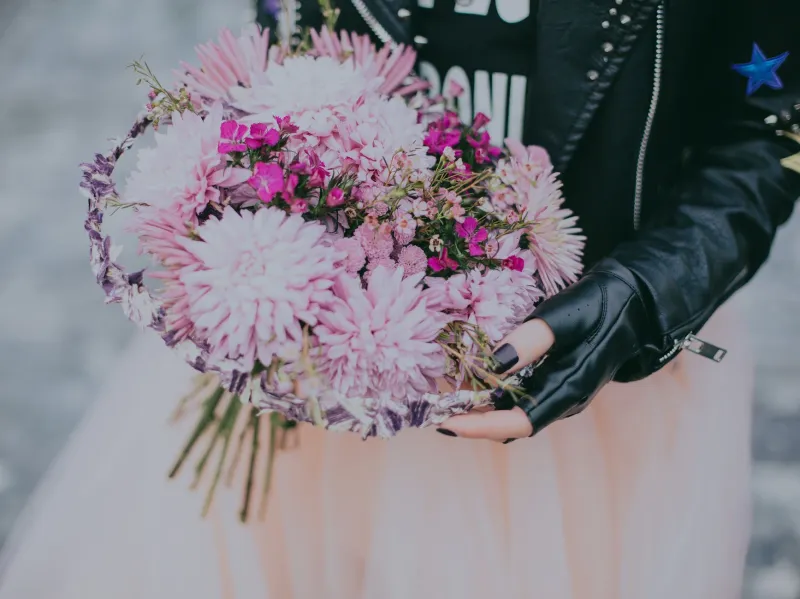
Let me tell you about an outfit I saw last spring that I haven't stopped thinking about. A woman on the subway in Brooklyn, tulle skirt in the palest blush, a vintage thrash metal band tee knotted at the waist, chunky combat boots, and a single strand of pearls at her throat. By every rule I was taught about getting dressed, it was a disaster. In reality, it was the most compelling thing I'd seen anyone wear in months.
That's paradox dressing. And if you haven't intentionally tried it yet, you're leaving the most interesting version of your personal style completely on the table.
The "Pick a Lane" Myth
For a long time, the fashion world operated on a neat little sorting system. You were either minimalist or maximalist. Streetwear or couture. Punk or preppy. Boho or structured. These categories made things easier for retailers, easier for stylists, easier for the algorithm—and infinitely more boring for the actual human beings trying to get dressed every morning.
The idea that a person should have a singular, coherent aesthetic has always been a little bit of a lie. Real people are multitudes. You can be someone who loves the precision of a tailored coat and someone who collects vintage band tees from the '90s. You can have a drawer full of delicate jewelry and a shelf full of chunky, statement sneakers. The contradiction isn't a flaw in your style—it's the most honest thing about it.
What's changed recently is that fashion, at its most forward edge, is finally catching up to this reality.
The Designers Making Contradiction Their Medium
Look at what's been happening on runways and in the work of emerging designers over the last few seasons. The combinations that would have gotten you sent home from a fashion school critique are now the most celebrated looks in the room.
Bimini and Collina Strada have both built entire aesthetic worlds around the idea that softness and aggression aren't opposites—they're collaborators. Telfar's approach to luxury has always been a deliberate subversion: making something that reads as high-fashion while explicitly refusing to exclude the communities that mainstream luxury has always kept out. That's a paradox built into the brand's DNA.
On the more accessible end, labels like Sandy Liang have made "both/and" their entire brand identity—pieces that are simultaneously childlike and sophisticated, precious and a little bit feral. You're meant to feel the tension. That tension is the point.
And then there's what's happening at the influencer level, which is honestly where paradox dressing is thriving most organically. Creators like Wisdom Kaye, Deja Smith, and Emma Rogue have built massive followings specifically because their outfits refuse to be categorized. They're not working from a mood board. They're working from instinct, and the instinct says: more is more interesting.
Why "Opposing" Aesthetics Work Together
Here's the thing about contrast in fashion that nobody really explains: it's the same principle as contrast in art, in music, in writing. The thing that makes a piece of music emotionally resonant is often the unexpected note, the key change you didn't see coming. The thing that makes a painting stop you is frequently the tension between elements that seem like they shouldn't coexist.
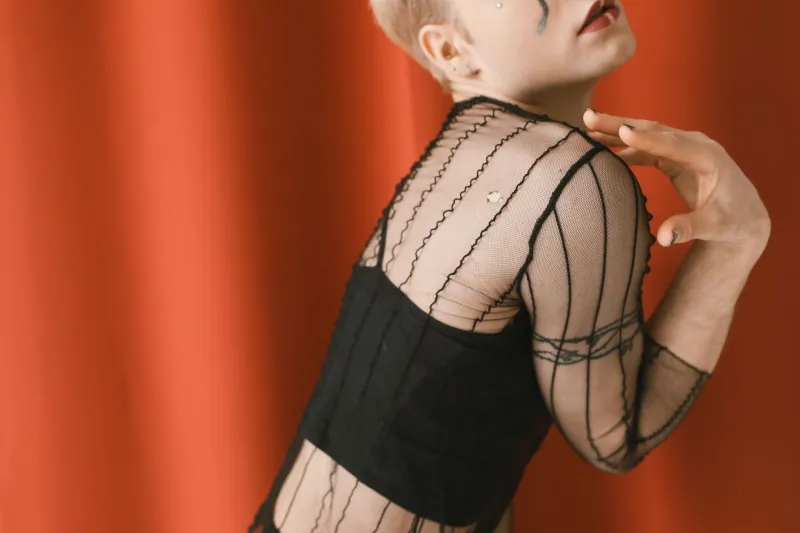
When you put a silk slip dress with a leather moto jacket, what you're doing—whether you think about it this way or not—is creating visual and conceptual tension that demands the viewer's attention. The softness of the silk becomes softer next to the toughness of the leather. The edge of the jacket becomes edgier against the femininity of the dress. Neither piece is as interesting alone as it is in conversation with its opposite.
This is why paradox dressing works when it works, and why it fails when it doesn't: the contrast has to be intentional. Not random, not careless—deliberate. You have to actually understand what each piece is saying before you can put them in dialogue.
How to Start Without Looking Like You Got Dressed in the Dark
I want to be honest: paradox dressing has a learning curve. Done without intention, it can read as chaotic rather than compelling. The difference usually comes down to a few things.
Anchor with proportion. When you're mixing opposing aesthetics, let one element control the silhouette. The tulle skirt and the band tee work because the skirt's volume is the clear visual anchor—everything else orbits around it. If both elements were equally demanding in terms of shape, you'd have visual chaos.
Let one element be unexpected. You don't need to subvert everything. A perfectly classic outfit—tailored trousers, white button-down, loafers—becomes a paradox dressing moment the second you add one thing that breaks the code. A dramatic platform sneaker. A sheer top layered under the button-down. A single maximalist earring. One unexpected choice is often enough.
Trust the through-line. Even the most contradictory outfits usually have something that ties them together—a color that repeats, a material that bridges two worlds, a mood that both pieces share even if their aesthetics don't. Find your through-line and the rest gets easier.
This Is the "Both/And" Moment
We're living through a broader cultural shift away from either/or thinking, and fashion is reflecting that in real time. The consumers who are most excited about getting dressed right now are the ones who refuse to be flattened into a single category—because they know that the most interesting version of themselves exists in the space between categories.
Paradox dressing isn't a trend. Trends come and go, and when they go, they take your whole aesthetic with them. This is something stickier: a philosophy of dressing that says I am more than one thing, and my clothes should prove it.
Wear the contradiction. It looks good on you.